2021年5月26日星期三

The Middle Routes of Beekeeping and Collecting Honey

China has a vast territory, rich nectar plants, diverse terrains and climates, and various nectar plants have different flowering periods throughout the year. In order to make full use of nectar plant resources in various places and improve economic efficiency, Chinese beekeepers cross geographical latitudes and chase flowers for honey everywhere. There are four main routes for the traditional transfer of bees in the country.This article is mainly introduce The Middle Lines for beekeeping and collecting honey.
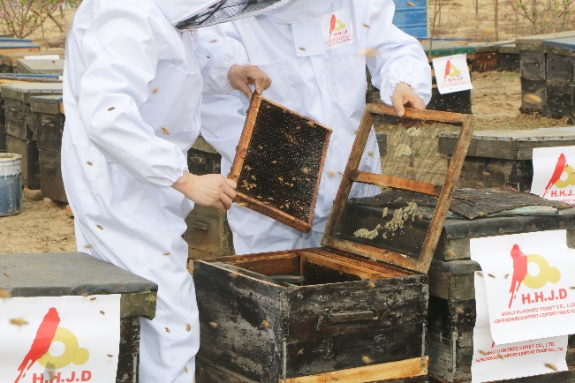
The Middle route for the transfer of bees is start from Guangdong,Guangxi to Jiangxi, Hunan to Hubei to Henan and Hebei,then go to Beijing,last to Inner Mongolia. This route uses the Beijing-Guangzhou railway as the main transit line. The specific arrangement is to transport the bee colony to the "Guangdong and Guangxi" rapeseed or milk vetch sites to breed bee colonies at the end of November or early December; By the end of February of the following year, go north to Jiangxi and Hunan to pick up rapeseed honey; At the end of March, transfer to central Jiangxi, Hunan Dongting Lake area or Hubei to pick clover honey; Transfer to Henan to pick acacia honey in late April and pick jujube/sidr honey nearby in late May; Transfer to Hebei and Beijing to pick vitex honey in late July and early August; Go north to Inner Mongolia to pick sunflower honey and grow buckwheat. It is usually transported directly to Guangdong and Guangxi or returned to the province of origin of the bee farm after the "half winter" in the Erdos grassland in Inner Mongolia.


In recent years, with changes in crop planting and the environment, as well as traffic and information exchanges becoming more convenient, beekeepers can learn about changes in nectar sources and adjust bee release routes in a timely manner, which makes bee release routes also change. It has to be diversified.

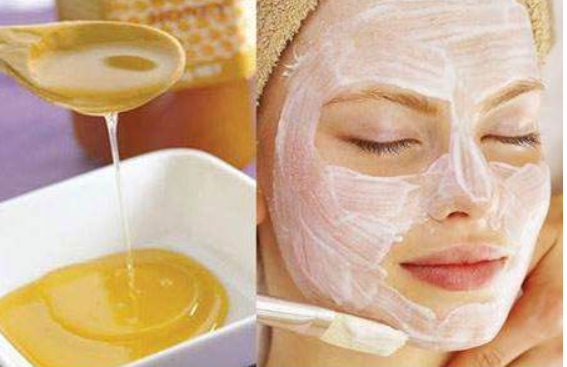
What's the Honey's Usage in Beauty?

Many people know that honey is very good for people. It can be applied externally or taken orally. Honey is highly regarded by many people in terms of health care and beauty. Then you know how to use honey in addition to ordinary usage to help skin care retain youth? Today we will take a look at how the honey can maintain skin.


1. Red Wine Honey Mask


Honey
has moisturizing and nourishing effects. This mask should be noted that the wine acid in red wine is fruit acid, which can promote the metabolism of keratin, dilute the pigment, and make the skin whiter and smoother, but people who are allergic to alcohol should use it with caution.

Method: Add a small glass of red wine and 2 to 3 spoons of honey to a thick state, then apply it evenly on the face, and wash off with warm water after 80% dry.

2. Honey Olive Oil Mask

This mask can prevent skin aging, eliminate wrinkles, moisturize and remove freckles. It is especially suitable for people with dry skin.

Take 100 grams of honey and 50 grams of olive oil and mix, heat to 40 ℃, stir, make it fully mixed evenly. When using, apply the mixed ointment to gauze, cover the face, peel off and wash after 20 minutes, 2-3 times a week.

3.Honey Lemon Mask

Take 10g of honey and heat it to 60℃ in water, add 10ml of lemon juice and mix thoroughly. After washing your face, apply it evenly on the face, wash off after 20-30 minutes, once a day,it can promote white and tender skin.

4. Honey Double-Ren Mask

Winter melon kernels contain fatty oleic acid, citrulline acid and other ingredients, which have the effect of reducing spots. Peach kernels are rich in vitamin E and vitamin B6, which not only help the skin resist oxidation, but also reduce the damage of ultraviolet rays. The moisturizing and nourishing effects of honey make the mask more effective.

Method: dry winter melon seeds and peach kernels and grind them into fine powder, add appropriate amount of honey to mix into a viscous paste, apply on the spots every night before going to bed, wash off the next morning, apply for three weeks, the spots will be gradually fade, so pay attention to sun protection during treatment.

5. Honey pearl powder mask

Prepare a small clean bottle, pour half a bottle of pearl powder, and then slowly pour the honey, stirring while pouring, so that the honey and pearl powder are fully mixed. Be careful not to pour too much honey, just adjust it to a paste. Then the mask is ready. Before use, wash your face with warm water, then use a small cotton swab to dip the adjusted mask evenly on the face, not too thick, just a thin layer, wash off after 1-2 hours, you can make the face is smooth and shiny.

Friends,let move and take actions now,let honey makes you more and more beautiful.

China The East line for Beekeeping and Collecting Honey

China has a vast territory, rich nectar plants, diverse terrain and climate, and the flowering period of nectar plants varies in different periods throughout the year. In order to make full use of nectar plant resources in various places and improve economic efficiency, Chinese beekeepers cross geographical latitudes and chase flowers for honey everywhere. There are four main routes for the traditional transfer of bees in China.This article will mainly introduce The East line.

The East route for the transfer of bees is from Fujian Province, Guangdong Province to Anhui Province,Zhejiang Province to Jiangsu Province and to Shandong Province,next to Liaoning Province, to Jilin Province,to Heilongjiang Province,finally to Inner Mongolia..The specific arrangement is that the bee farm will go to Guangdong or Fujian to overwinter and breed in December, until the end of February or early March of the following year, the first stop to the north to pick rapeseed honey in Zhejiang or Southern Anhui;In mid-April, it will be transferred to southern Jiangsu to pick cabbage rapeseed honey and clover honey; Then transferred to Shandong in May to pick acacia honey; Then shipped from Jiaodong peninsula to Liaodong peninsula, picking the second acacia honey; Next directly to Changbai Mountain in Jilin in June or Heilongjiang to pick up linden honey; After the linden tree blooms in mid-to-late July, part of the apiary turns south back to Jilin, Liaoning or Inner Mongolia to pick sunflower honey.After September, the temperature in Northeast and Inner Mongolia dropped. The bee farms reproduced in the sunflower field and passed the "half winter". By mid-to-late November, they would go south to the southern breeding field in Guangdong and Fujian. The transfer distance of the east line is about 4000~5000 kilometers.

In recent years, with changes in crop planting and the environment, as well as traffic and information exchanges becoming more convenient, beekeepers can learn about changes in nectar sources and adjust bee release routes in a timely manner, which makes bee release routes also change. It has to be diversified.
2021年5月17日星期一

The FDA is Considering Setting a Nicotine Cap For Cigarettes

In December 2020, Health Canada proposed setting in place a nicotine limit of 20 milligrams per milliliter (mg/ml) for all vaping products. Referring to a BMJ paper (which was later retracted) that concluded that in Canada there was an increase in youth vaping and subsequent smoking, Health Canada “identified the availability of high-nicotine concentration vaping products in the Canadian market since 2018 as one of the key factors that has contributed to the rise in youth vaping.”


On the other hand, data from Europe has indicated that after a nicotine cap was set in place by the EU Tobacco Products Directive (TPD), some seasoned smokers who had switched to vaping, were struggling with the low dose. To this effect, many former smokers have been reverting back to smoking, or resorted to purchasing their preferred products on the black market.


The nicotine cap in Europe has not yielded a positive result

Despite the data and arguments about the non-effectivity of setting in place such a cap, the FDA has just announced that it is considering the measure. An article on Reason quoted The Wall Street Journal, as pointing out that the idea behind reducing nicotine is that it “would lower the chemical in cigarettes to nonaddictive or minimally addictive levels, aiming to push millions of smokers to either quit or switch to less harmful alternatives such as nicotine gums, lozenges, or e-cigarettes.”


However rightly added the piece on Reason, this same FDA is going against its own reasoning by waging a war on e-cigarettes, despite their proven harm reduction properties. “Note that this same FDA has waged a war on these same e-cigarettes by banning the most popular flavors to ensure that these new and less harmful products were as unappealing as a plate of raw broccoli for breakfast.”


Consuming higher levels nicotine is more effective for smoking cessation


Meanwhile, countless studies have indicated that consuming higher levels of nicotine and using NRTs containing higher doses, is more effective for smoking cessation than consuming lower levels. A 2019 review of research related to NRTs, had found that not only are smokers who use higher doses of nicotine more likely to quit than those using lower doses, but also that some do better by using two forms of NRT rather than one.


Additionally, the review found that in smokers who intend to switch to using an NRT, it helped to start using it before quitting cigarettes. This may be because having nicotine already present in their system, smokers were getting less of a hit when they light up, and therefore can make cigarettes less enjoyable.

Altria Group to FDA: Clarify Concerns About Nicotine

The tobacco giant is concerned over the FDA’s nicotine messaging and what they view as misconceptions about the substance.
Richmond, Va.-based Altria Group asked the Food and Drug Administration and its Center for Tobacco Products to clarify the agency’s position on nicotine.

CSP Daily News reports that Altria wants the Center for Tobacco Products to “correct the deeply entrenched public misperceptions regarding the health risks of nicotine.”

This favor was asked by Paige Magness, Altria’s senior vice president of regulatory affairs, via a letter directly addressed to CTP director Mitch Zeller.

“Left unaddressed, these widespread nicotine misperceptions could discourage adult smokers from switching to non-combustible tobacco products that may present lower health risk as compared to combustible cigarettes,” Magness said in a letter.

Altria made the letter public, reports CSP Daily News. According to the FDA, nicotine is viewed on a continuum of risk. For instance, the FDA argues that “products containing nicotine pose different levels of health risk to adult users, with combustible products—like cigarettes, with their toxic mix of more than 7,000 chemicals and efficient delivery of nicotine to maximize addiction potential—being the most harmful.”

Nicotine replacement therapies are considered the least harmful, as noncombustible products fall “somewhere in between.” Such a position is crucial due to its similar emulation to the official position of agencies like Public Health England (PHE).

PHE is one of the only governmental public health institutions to claim that e-cigarettes and non-combustible products are at least 95 to 98 percent safer than regular cigarettes.

Tobacco harm reduction advocates have argued that nicotine is relatively benign while still being addictive. Nevertheless, the real risks of smoking come from the combustion and the inhalation of cigarettes which transmit over 7,000 harmful chemicals.

“The FDA has received the letter and will respond directly to Altria,” FDA press officer Alison Hunt told CSP Daily News.

What’s Next For Synthetic Nicotine?

Nicotine derived from tobacco leaves is the standard component of any nicotine product that does not use tobacco. These products range from everyday e-liquids, like those made by Hangsen, or nicotine replacement therapies that are intended to wean smokers from their dependence on nicotine.


Even though other companies have tried, and sometimes failed, to get the one-up on their competition by using synthetic nicotine, it has not revolutionized the vaping industry. A majority of companies still use tobacco-derived nicotine, as it passes through several certification processes to be suitable for human consumption.


Polish company Chemnovatic is another concern that creates and markets lab-based nicotine. It supplies synthetic nicotine to a variety of companies, from e-juice makers to Big Pharma for its nicotine replacement therapies, but it stops short of using their product to make e-juice. SYN Nicotine has yet to appear on the market, but despite its promise, it still will be subject to FDA regulations.

Nicotine help You Quit Tobacco

Nicotine is the main addictive substance in tobacco. When a person uses tobacco, many parts of the body get used to having nicotine in them. When a person quits tobacco, they also quit nicotine and will likely have withdrawal from it. This is because the body has to get used to not having nicotine.

The nicotine in tobacco leads to actual physical dependence. This can cause unpleasant withdrawal symptoms when a person tries to quit. Nicotine replacement therapy (NRT) gives you nicotine – in the form of gum, patches, sprays, inhalers, or lozenges – but not the other harmful chemicals in tobacco. NRT can help relieve some of the physical withdrawal symptoms so that you can focus on the psychological (emotional) aspects of quitting.

Many studies have shown using NRT can nearly double the chances of quitting smoking. It hasn’t been studied as much for quitting smokeless tobacco, but the NRT lozenges may help.

People who smoke and are significantly dependent on nicotine should consider nicotine replacement or drug therapy to help them quit.

Nicotine replacement therapy (NRT) can help with the difficult withdrawal symptoms and cravings that most people say is their only reason for not giving up tobacco. Using NRT reduces those symptoms.


Many people can quit tobacco without using NRT, but most of those who attempt quitting do not succeed on the first try. In fact, people trying to quit usually need many tries before they’re able to quit for good. Most people who try to quit on their own go back to smoking within the first month of quitting – often because of the withdrawal symptoms. But the good news is that many do succeed. In fact, there are now more people who formerly smoked than people who currently smoke!

 
Together with counseling or other support, NRT may help increase the number of smokeless tobacco users who quit, too.


You can start using nicotine replacement therapy (NRT) as soon as you throw away your tobacco. You don’t need to wait a certain length of time to put on the patch or start using the gum, lozenge, nasal spray, or inhaler. Double-check this information with the instructions on your chosen method of nicotine replacement, but in general there’s no need to wait to start using NRT.